
HOW WE TURN PACKAGING COMPLEXITY INTO CONTROL
Packaging programs rarely fail because of creativity.
They fail because of unclear decisions, late involvement and hidden production risks.
At Collabra, we step in early to bring structure, recommendations and execution logic — so complexity becomes manageable, and packaging programs stay in control from first idea to shelf.

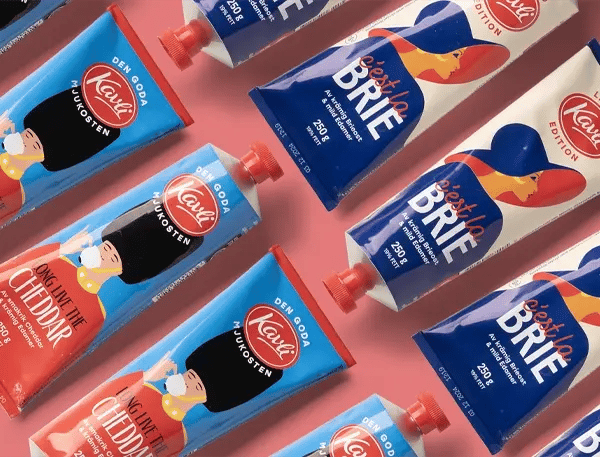
KAVLI — From single project to centralized artwork control
What was at stake
Kavli operates across multiple markets with independent entities, different suppliers and overlapping portfolios — a setup that increases risk when products are reused or adapted across markets.
Our expert intervention
We identified early that the challenge wasn’t just adapting one product, but creating a repeatable way to manage artwork across markets. Our recommendation was to test not only execution, but also process and approval logic.
How it was executed
Kavli Norway experienced structured artwork reviews and approvals through Cway during the adaptation project. Design and artwork vendors were included early, ensuring smooth collaboration.
Outcome & value
What started as a single adaptation became the foundation for Cway as a centralized artwork management hub — supporting long-term portfolio control instead of one-off projects.
Lifecycle perspective
From isolated execution → portfolio-level artwork governance.

SANTA MARIA — Designing order across 600+ artworks
What was at stake
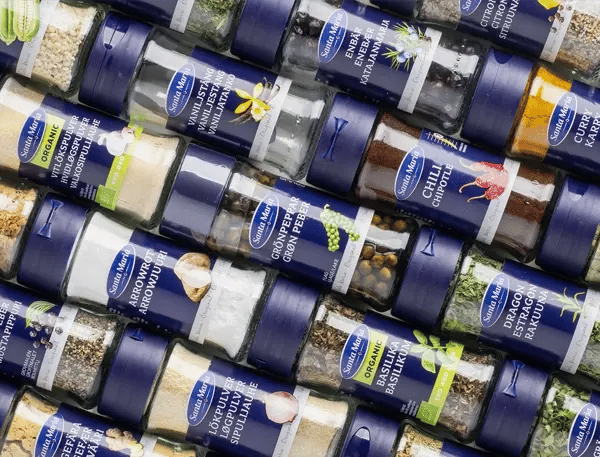
More than 600 artworks across markets, suppliers and printers — with high risk of delays, revisions and inconsistency.
Our expert intervention
Before production, we designed a clear artwork architecture and planning logic, resolving most issues before artwork implementation even started.
How it was executed
Collabra led planning, coordination, printer selection, design implementation and proofing — supported by structured content management and proactive scheduling.
Outcome & value
-
Average of 1.5 revisions per artwork
-
Predictable timelines
-
Confident decision-making throughout the project
Lifecycle perspective
From reactive corrections → structured, repeatable production flow.

ESTRELLA — Making ecommerce choices effortless

What was at stake
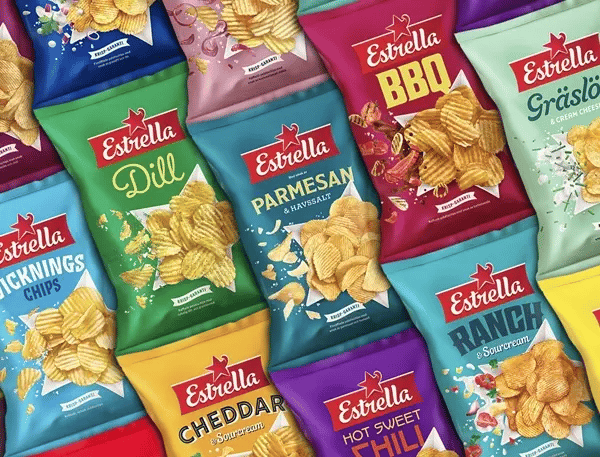
In mobile ecommerce environments, Estrella’s products competed for attention at very small sizes. Complex visuals and inconsistent presentation risked reducing recognition and slowing down purchase decisions.
Our expert intervention
We recommended a “less is more” ecommerce logic — prioritizing fast recognition over decorative elements, and creating clear rules for how brand, product name and claims should appear at small scale.
How it was executed
Our ecommerce design team simplified hero images, removed non-essential elements and enhanced key identifiers. We also established guidelines to ensure consistency across product families and alignment with existing packshots.
Outcome & value
-
Improved legibility and recognition on mobile
-
Stronger family coherence across the assortment
-
Faster navigation and clearer choices for shoppers
Lifecycle perspective
From individual images → scalable ecommerce presentation logic.

APOTEKSGRUPPEN — Building a foundation for long-term redesign
What was at stake
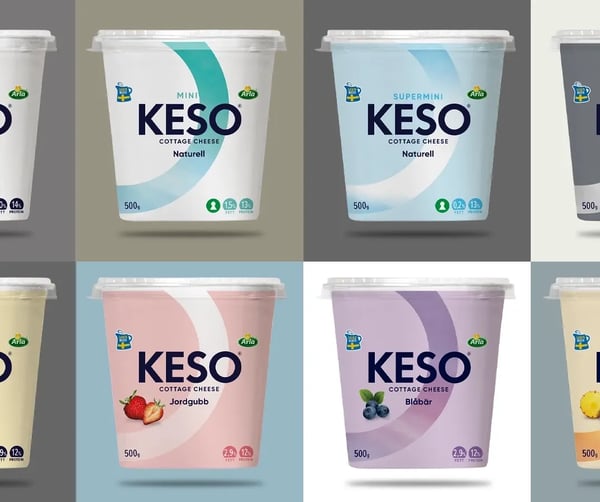
Apoteksgruppen needed to modernize a large private-label assortment across multiple categories, while maintaining shopper recognition and enabling cost-efficient, step-by-step redesigns over time.
Our expert intervention
Instead of treating this as a one-off redesign, we recommended creating a clear design architecture — defining how categories align, differ and evolve within a unified brand system.
How it was executed
We analyzed and structured the assortment, developed multiple design tracks and refined color schemes to balance renewal with recognition. Once a direction was chosen, we created guidelines and toolkits for future projects and ensured printability through structured print management.
Outcome & value
-
Clear decision-making foundation for current and future redesigns
-
Consistent category structure across the assortment
-
Smooth, predictable implementation over time
Lifecycle perspective
From isolated redesigns → long-term packaging system.

ARLA — Solving print issues before they reach the shelf
What was at stake
Arla faced a critical packaging issue where vanilla yoghurt was mistaken for strawberry due to color appearance in print — a problem with direct impact on shopper choice and brand trust.
Our expert intervention
We identified early that the issue wasn’t design intent, but print behavior. Our recommendation focused on adjusting color logic based on real print coverage, rather than digital appearance.
How it was executed
Collabra’s print manager analyzed the TetraBrik printing process and recalibrated color values to ensure accurate visual distinction. Print expertise was integrated directly into design discussions, preventing future issues.
Outcome & value
-
Correct product differentiation on shelf
-
Reduced risk of costly reprints
-
Lower ink usage without compromising visual quality
Lifecycle perspective
From late-stage corrections → print-aware design decisions.

MILLS — Scaling product visuals without scaling complexity
What was at stake
Mills needed consistent, high-quality product visuals across a growing assortment and multiple channels. Traditional photoshoots would have meant high costs, long lead times and limited flexibility when products or claims changed.
Our expert intervention
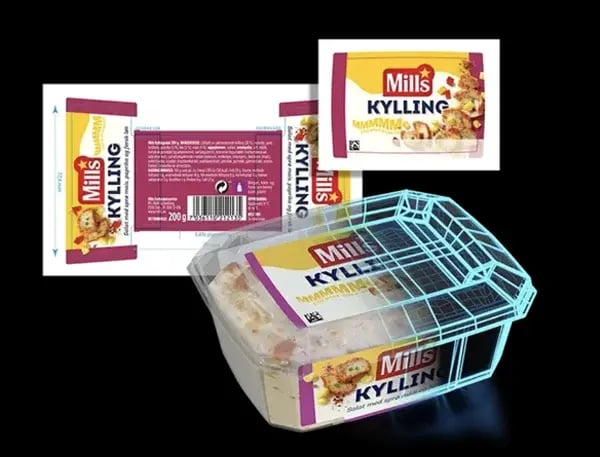
We recommended moving to a CGI-based visual production model — enabling Mills to scale visuals across formats and markets without repeating production work.
How it was executed
Collabra created accurate CGI pack models and managed the visual production process to ensure brand consistency and realism. The CGI assets were designed to be easily adapted for different uses, from marketing materials to ecommerce.
Outcome & value
-
Reduced dependency on repeated photoshoots
-
Faster updates when products or content changed
-
Consistent visuals across channels and markets
Lifecycle perspective
From static images → reusable, future-proof visual assets.