
 Tilda Eriksson
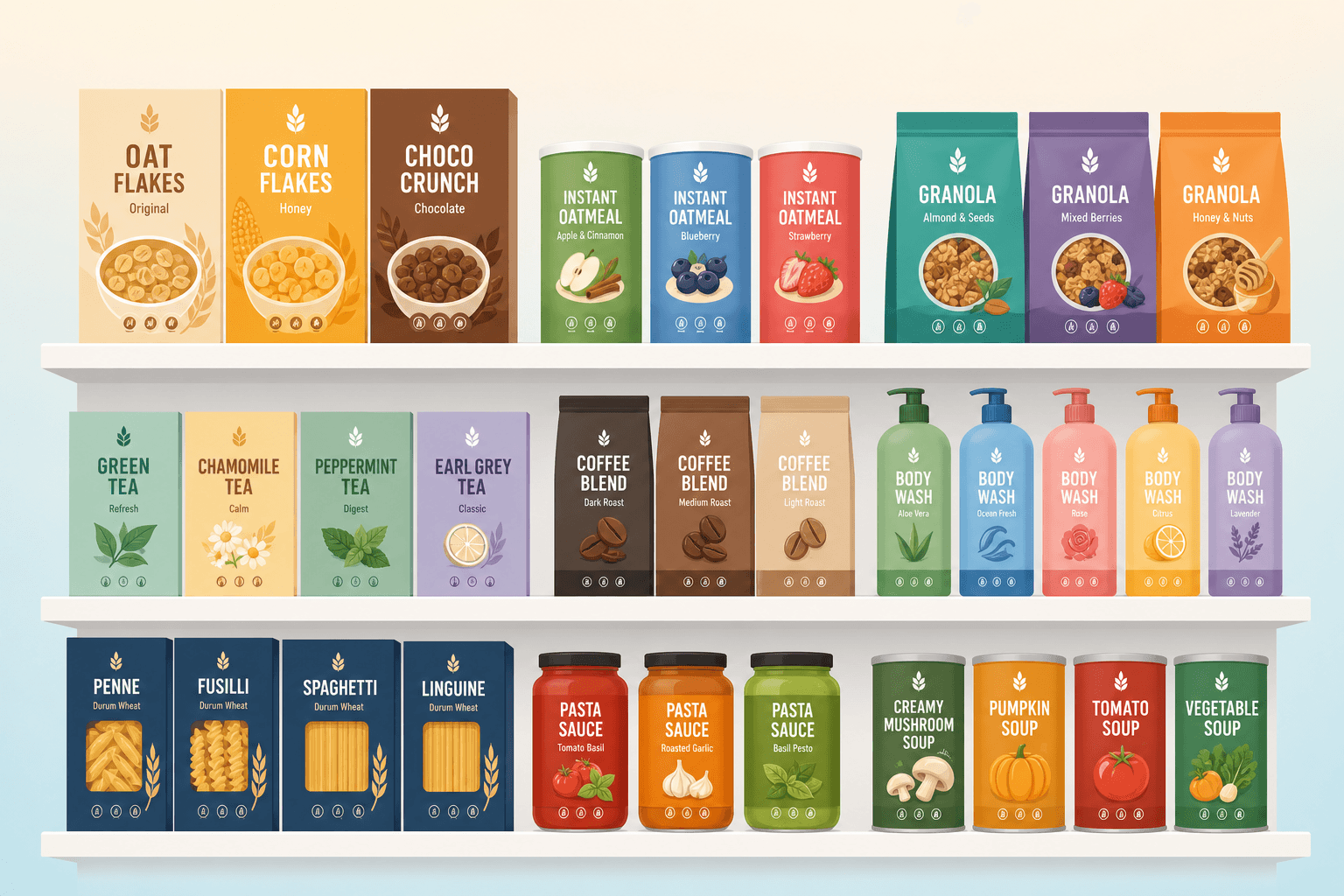
As product portfolios grow, packaging design systems often become harder to maintain. New SKUs, product extensions, and regional adaptations can gradually weaken the original design architecture. Design architecture analysis helps brands restore clarity, strengthen product differentiation, and ensure the entire assortment works together on shelf.
How FMCG brands maintain clarity and consistency as product assortments grow.
As brands expand their product portfolios, packaging design systems often become more complex.
New SKUs, product extensions, seasonal launches, and regional adaptations gradually reshape the visual landscape of the brand.
Without careful management, the original design architecture can begin to drift.
When Assortments Grow, Design Systems Often Break Down
What starts as a clear design framework can slowly evolve into a fragmented portfolio.
Common signs of design architecture drift include:
- Inconsistent visual hierarchy between products
- Unclear product differentiation
- Conflicting color usage across categories
- Weak shelf blocking within the brand range
For consumers, this can reduce clarity and make products harder to navigate on shelf.
Why Design Architecture Matters in FMCG
Packaging architecture helps consumers quickly understand a brand’s product range.
A strong design system allows shoppers to:
- Recognize the brand instantly
- Understand product variants
- Navigate product families easily
When the architecture is clear, the brand becomes easier to shop—and easier to remember.
Analyzing the Packaging Portfolio
Design architecture analysis examines the full assortment to identify structural inconsistencies.
This includes evaluating:
- Color usage across variants
- Typography hierarchy
- Layout consistency
- Visual relationships between SKUs
The goal is not to redesign everything—but to identify where the system has drifted and how it can be strengthened.
Creating a Clear Roadmap for Design Consistency
Once inconsistencies are identified, brands can establish clear guidelines that restore structure across the portfolio.
This often results in:
- Stronger visual hierarchy
- Clearer product differentiation
- Improved shelf blocking
- A more scalable design system for future launches
A Portfolio That Works as One Brand
In competitive FMCG categories, brands rarely win with a single product—they win with a strong assortment.
Design architecture analysis ensures that every product contributes to the same brand story on shelf.
