
 William Janeway
The Complete Guide to Omnichannel Packaging Assets
 William Janeway : 2026-11-11 10:00
How FMCG packaging and brand teams keep shelf-ready packaging and ecommerce packaging images consistent across SKUs, channels and approvals.
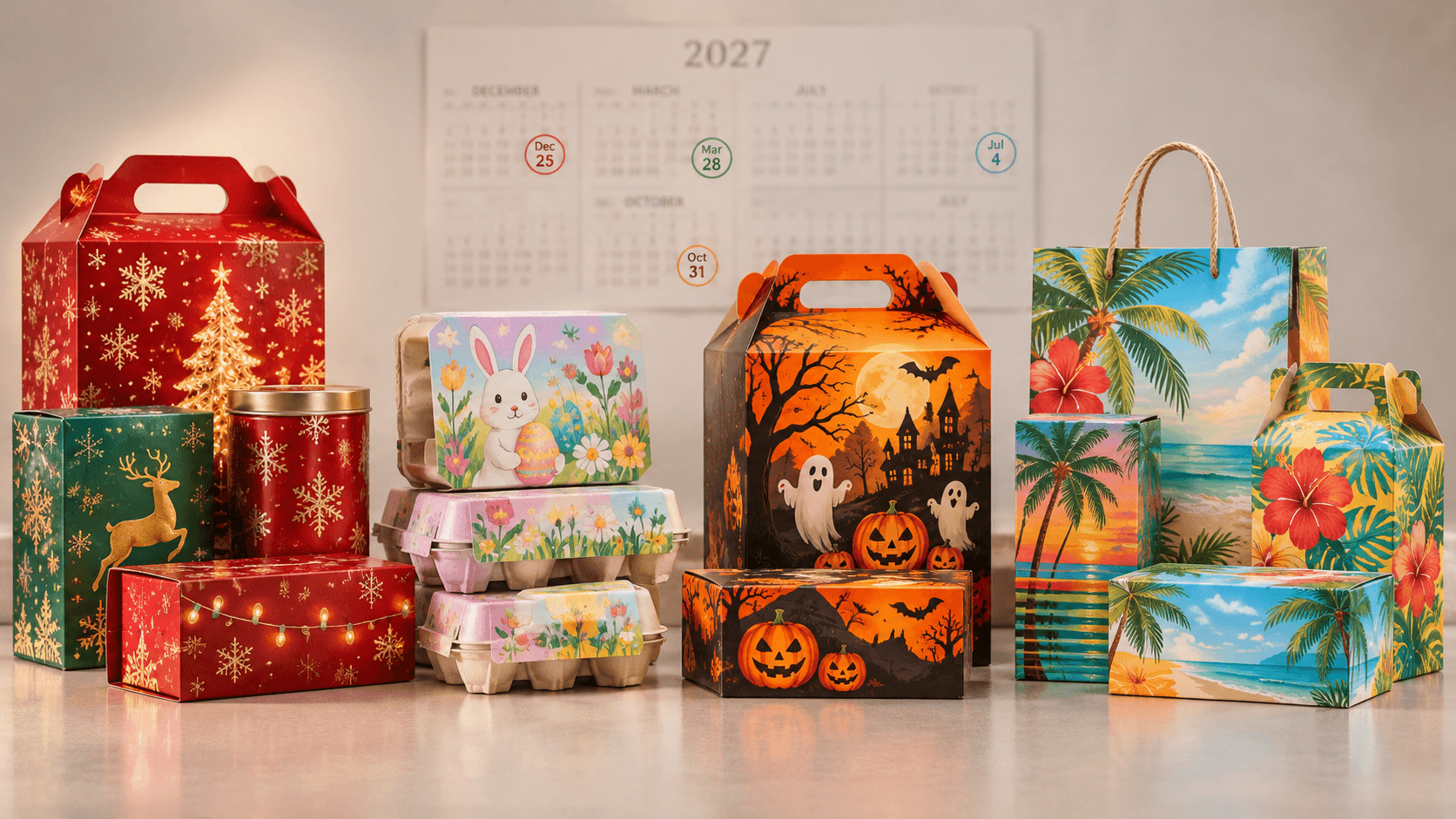
Seasonal packaging has one fixed deadline: the season itself. If a Christmas pack reaches the shelf two weeks late, the brand doesn’t sell less, it misses the moment entirely. Unsold limited editions then become waste.
Most seasonal packaging problems don’t start in design. They start with a late brief. This guide gives brand teams a 2027 calendar for the key retail seasons and shows how to plan each launch backwards from the shelf date, so there is time for design, approvals and printing.
Seasonal packaging is packaging designed for a specific time of year, holiday or event, such as Christmas, Easter or summer. It is usually sold for a limited period and produced in smaller runs than standard packaging.
It can be a fully new design, or a variation of an existing pack where only the printed artwork changes. Both need more planning than most brand teams expect.
Seasonal launches have less room for error than regular packaging updates. A few reasons:
Starting early is the cheapest way to protect a seasonal launch.
The table shows key retail seasons in 2027 and a guide for when to start the brief. Exact timing depends on your retailers, markets, supply chain and whether the pack is a new structure or an artwork variation.
Season |
2027 date | Start the brief by |
|---|---|---|
| Chinese New Year | 6 February | Spring–summer 2026 |
| Valentine’s Day | 14 February | Spring–summer 2026 |
| Ramadan and Eid al-Fitr | approx. 8 February – 9 March | Spring–summer 2026 |
| Mother’s Day (UK) | 7 March | Summer 2026 |
| Easter | 28 March | Summer 2026 |
| Mother’s Day (US) | 9 May | Autumn 2026 |
| Summer and BBQ season | June–August | Autumn 2026 |
| Back to school | August–September | Winter 2026–27 |
| Diwali | approx. 29 October | January–February 2027 |
| Halloween | 31 October | January–February 2027 |
| Black Friday | 26 November | February–March 2027 |
| Christmas | 25 December | January–February 2027 |
Ramadan, Eid and Diwali follow lunar calendars, and dates can vary by a day or two by region.
If you are planning early 2027 seasons and haven’t started yet, focus on artwork variations of existing packs. A new structure will be hard to deliver in time.
The simplest way to plan a seasonal launch is to start from the date the product must be on shelf and count backwards. A typical FMCG seasonal project moves through these stages:
Approvals are where most timelines slip. Seasonal artwork often involves marketing, legal, regulatory, suppliers and retailers. Each extra round of comments by email adds days.
Christmas is the biggest packaging season for many brands, and the one that needs the earliest start. Here is a typical timeline for a Christmas 2027 launch in Europe:
If your brand needs new structures, special finishes such as foil or embossing, or new suppliers, add extra time at the start.
Not every seasonal pack needs a new structure. One of the fastest and lowest-risk options is a seasonal artwork variation on an existing pack:
This approach shortens the timeline and keeps costs under control. It also makes it easier to reuse the same system each year, with a new seasonal design on a proven pack.
Save new structures and special finishes for the seasons where they matter most, and plan those earliest.
Seasonal packs are produced fast, and that is when errors happen. When a design changes, mandatory information has to stay correct:
A clear approval process, with one current version of each file and one place for comments, prevents most of these mistakes. This works on any packaging platform, as long as everyone uses the same process.
Seasonal and gift packaging are often criticized for being excessive. Large boxes, mixed materials and decoration that is hard to recycle are typical issues.
In the EU, the Packaging and Packaging Waste Regulation (PPWR) has applied since August 2026, and its requirements on packaging design, recyclability and minimization will be introduced in stages over the coming years. Seasonal packaging is not an exception.
Practical steps for 2027:
Use this before you brief any 2027 seasonal launch:
Collabra has worked with packaging for brand owners since 2003. For seasonal launches, we cover the whole path from strategy to print-ready files:

 William Janeway : 2026-11-11 10:00
How FMCG packaging and brand teams keep shelf-ready packaging and ecommerce packaging images consistent across SKUs, channels and approvals.
 William Janeway : 2026-11-10 10:30
Learn how to design shelf-ready packaging that boosts retail shelf visibility and speeds up artwork approvals in seven actionable steps.
 William Janeway : 2026-10-03 10:30
Compare six European food packaging design agencies for seasonal launches and cross-market format adaptation with practical selection criteria.