
 William Janeway
What a Packaging Strategy Partner Really Does for FMCG Brands
 Tilda Eriksson : 2026-10-13 10:45
Why packaging programs fail without strategy, what a good packaging strategy includes, and what to look for in a packaging strategy partner.

Packaging is much more than a design project. For brands managing multiple products, markets, languages and packaging formats, it is an ongoing operational process involving artwork, regulatory requirements, approvals, suppliers and print production.
As packaging portfolios grow, coordinating these activities becomes increasingly complex. Files multiply, approval processes slow down, responsibilities become fragmented, and even small changes can create costly delays or errors.
This is where a packaging operations partner can make a difference.
A packaging operations partner helps brands manage and improve the entire packaging process, from operating model and design adaptation to artwork production, approvals, print handover and lifecycle management. Rather than focusing on a single deliverable, the partner helps connect people, processes and systems to make packaging operations more predictable, efficient and scalable.
But what does a packaging operations partner actually do, and how can a brand know when it needs one?
A packaging operations partner is an external specialist that helps a brand manage the processes behind its packaging, ensuring that the right information, artwork and approvals move efficiently from initial brief to production.
Unlike a traditional design agency, which typically focuses on creative development, or a printer, which focuses on manufacturing, a packaging operations partner looks at how the entire packaging workflow operates.
This may include:
The exact scope depends on the brand’s needs. Some companies need hands-on support with artwork and production. Others need help improving their existing processes, clarifying responsibilities or introducing better tools and ways of working.
The common objective is to create a packaging operation that works reliably across products, teams, suppliers and markets.
Packaging operations involve many connected activities. When these activities are managed separately, even a relatively small packaging change can trigger unnecessary rounds of communication, rework and approval.
A packaging operations partner helps bring these activities together.
Before introducing new tools or changing workflows, it is important to understand how packaging operations currently work.
A partner can map the process from the initial brief to final print production, identifying bottlenecks, duplicated work, unclear responsibilities and potential sources of error.
This assessment helps answer practical questions:
Based on these findings, the partner can help define a more effective operating model, with clearer responsibilities, more consistent workflows and better visibility across the packaging lifecycle.
As a packaging portfolio expands, consistency becomes harder to maintain without clear standards.
Different teams or suppliers may use different templates, naming conventions, approval procedures and file-storage practices. Over time, this can make it difficult to identify the latest approved artwork or understand which changes have been implemented.
A packaging operations partner can establish standards for artwork creation, file management, approvals and revision control.
This includes defining master artwork rules, reusable templates, approval responsibilities and procedures for managing changes. A central, controlled source of approved assets also helps reduce the risk of outdated or incorrect files reaching production.
Good governance does not mean adding unnecessary bureaucracy. It means making the correct process clear and repeatable, so teams can work faster without sacrificing control.
Approved creative concepts still need to be translated into technically accurate, production-ready packaging files.
Artwork production can involve adapting designs to different pack formats, creating product variants, localising content for different markets and implementing changes to ingredients, claims, instructions or regulatory information.
Each adaptation must preserve the intended design while meeting technical production requirements and the relevant content specifications.
A packaging operations partner coordinates these adaptations, manages artwork versions and helps ensure that changes are implemented consistently across the portfolio.
This becomes particularly valuable when a single product design must be maintained across numerous SKUs, languages, formats or markets.
Packaging is rarely owned by one team. Brand, marketing, regulatory, legal, quality, procurement, supply chain and external suppliers may all contribute to the same project.
Without a clearly defined workflow, responsibilities can overlap or fall between teams. Reviewers may receive incomplete information, approvals may be missed, and production files may be released before all required checks are complete.
A packaging operations partner helps coordinate stakeholders by clarifying who needs to review what, when decisions are required and who is accountable for each approval.
Structured workflows make it easier to identify outstanding actions, resolve issues and keep packaging projects moving towards their deadlines.
The transition from approved artwork to physical production is a critical stage of the packaging process.
Before files are released, they may need to pass technical validation, content checks, digital proofing and colour-management reviews, depending on the packaging format and production requirements.
A packaging operations partner helps coordinate these checks and ensures that printers and converters receive the correct, approved files and relevant production information.
Controlled handovers reduce ambiguity and help prevent avoidable problems caused by incorrect versions, missing information or incomplete approvals.
When packaging activity is managed through disconnected spreadsheets, email threads and shared folders, it can be difficult to understand the status of a project or identify the latest approved version.
A packaging operations partner can help establish or improve the systems used to manage artwork and packaging assets, including digital asset management (DAM) and artwork management solutions.
Depending on the organisation’s needs, these systems can provide version history, approval records, audit trails, project status visibility and reporting on operational performance.
Technology alone, however, is not a complete solution. Systems deliver greater value when supported by clear processes, defined ownership and consistent ways of working.
Not every brand needs dedicated packaging operations support. The need usually emerges when packaging becomes a recurring, interconnected business process rather than a series of independent design projects.
The following signs can help identify when additional support may be valuable.
More products, pack formats, languages and markets mean more artwork versions to create, review, approve and maintain.
A change to one product may need to be reflected across several packaging formats or market-specific variants. Without standardised processes and clear version control, the risk of inconsistency increases.
A packaging operations partner can help establish repeatable workflows that support portfolio growth without requiring every new variant to be managed from scratch.
New product launches, relaunches, promotional campaigns and regulatory updates all create additional packaging work.
When changes are frequent, manual coordination can become a bottleneck. Teams spend more time chasing approvals, checking file versions and resolving avoidable issues, leaving less time for higher-value work.
Structured workflows and clear accountability help brands manage change more efficiently while maintaining the necessary checks.
In many organisations, packaging responsibilities are distributed across several departments. Marketing owns the design brief, regulatory reviews the content, procurement manages supplier relationships, and production coordinates the printer.
Each team may manage its own tasks effectively, yet the overall process can still lack a clear owner.
A packaging operations partner helps connect these responsibilities, making the end-to-end workflow more transparent and ensuring that dependencies between teams are managed.
Incorrect versions, inconsistent content, missing information and late-stage corrections can create unnecessary costs and put launch dates at risk.
Repeated errors may indicate that the underlying process needs attention, rather than that individual team members simply need to be more careful.
Clear standards, controlled approvals, systematic version management and appropriate validation checks help reduce avoidable rework.
If packaging projects regularly stall while teams wait for feedback, approvals or supplier responses, it may be time to review the workflow.
A packaging operations partner can help identify where time is being lost, define review responsibilities and improve the visibility of outstanding decisions.
The objective is not to rush essential reviews, but to remove unnecessary waiting, duplication and confusion.
External partners often have different processes, technical requirements and ways of exchanging files.
As the supplier network grows, maintaining consistency becomes more difficult. Teams may need to coordinate different specifications, approval procedures and production schedules across several markets.
A packaging operations partner can help standardise communication and handovers while ensuring that market-specific and supplier-specific requirements are addressed.
Brands need to know which artwork version is approved, who approved it, when the approval took place and whether the correct file was released to production.
If this information is difficult to retrieve, the organisation may struggle to manage packaging changes consistently or demonstrate how decisions were made.
A more controlled operating model, supported by appropriate systems and documentation, helps improve traceability and provides a clearer view of the packaging lifecycle.
The benefits depend on the brand’s starting point, portfolio complexity and existing capabilities. However, a well-designed packaging operations model can deliver value in several areas.
Greater operational efficiency. Standardised workflows and clearer responsibilities reduce unnecessary coordination, duplication and rework.
Better control over artwork and versions. Teams have a clearer understanding of which files are current, approved and ready for production.
More predictable launches. Improved visibility of tasks, dependencies and approvals helps teams identify potential delays earlier.
Stronger cross-functional collaboration. Brand, regulatory, quality, procurement and production teams work within a more consistent process.
Improved scalability. Repeatable standards and workflows make it easier to manage additional products, markets and packaging variations.
Better compliance oversight and traceability. Documented reviews, controlled changes and approval records support more consistent packaging governance.
These benefits are not automatic. They depend on how well the operating model is designed, how consistently it is followed and whether the chosen processes and tools fit the organisation’s actual needs.
These three roles can work closely together, but they address different needs.
Partner type |
Primary focus | When it is most useful |
|---|---|---|
| Design agency | Creative concepts, visual identity and packaging design | Developing or refreshing a brand’s packaging design |
| Printer or packaging converter | Manufacturing, materials, printing and production quality | Producing packaging to the required technical specifications |
| Packaging operations partner | End-to-end workflows, artwork coordination, approvals, governance and supplier handovers | Managing packaging complexity across teams, products and markets |
The roles are complementary rather than mutually exclusive. A brand may continue working with its existing design agencies and printers while engaging a packaging operations partner to coordinate the process between them.
This distinction is important: the objective is not necessarily to replace existing suppliers, but to make the packaging ecosystem work more effectively as a whole.
A dedicated packaging operations partner is not always necessary.
A smaller brand with a limited product range, infrequent packaging changes, one primary market and a trusted design agency may be able to manage the process with a straightforward design-to-print workflow.
The same may be true for an organisation that already has a capable internal packaging team, clear process ownership, reliable artwork management and effective supplier coordination.
The key question is not simply how many products a brand has. It is how much complexity the organisation needs to manage, how well its current processes handle that complexity and whether there are recurring problems that internal resources cannot efficiently solve.
For some brands, targeted improvements to existing workflows may be enough. Others may benefit from ongoing operational support or a more comprehensive redesign of their packaging processes.
Selecting a partner starts with understanding the challenges the business needs to solve.
Consider the following questions when evaluating potential partners:
Do they understand the entire packaging lifecycle? Look for an ability to connect strategy, artwork, approvals, production and ongoing change management rather than focusing on a single task.
Can they work with your existing suppliers? A good partner should understand how to coordinate agencies, printers, converters and internal teams without creating unnecessary disruption.
Can they adapt to your organisation? Your operating model should reflect the complexity of your portfolio, internal capabilities and regulatory requirements.
Do they combine process expertise with practical execution? Depending on your needs, you may require hands-on artwork production, project management, operating model development or a combination of these services.
Can they improve control and visibility? Ask how they manage artwork versions, approval records, handovers, responsibilities and operational reporting.
Will their approach scale with your business? The solution should support future launches, additional markets and portfolio growth without introducing unnecessary complexity.
The right partner should help solve the problems that matter most to your organisation, with a clear understanding of responsibilities, deliverables and expected outcomes.
Collabra helps brand owners simplify, control and improve complex packaging operations.
By connecting strategy, design, artwork, approvals, production and lifecycle management, Collabra supports brands in building packaging processes that are easier to manage and better equipped to handle change.
The support can take different forms depending on the organisation’s needs. This may include hands-on design and artwork production, packaging project management, procurement support, team training, design evolution or improvements to the broader packaging operating model.
For brands working across multiple products, suppliers or markets, this joined-up approach can help bring greater structure to packaging operations while allowing existing teams and partners to focus on their areas of expertise.
Rather than treating every packaging change as a separate project, the goal is to establish a more consistent way of working across the portfolio.
If packaging changes are becoming harder to coordinate, approvals regularly delay launches, artwork errors create rework or no single team has visibility across the entire process, it may be time to look beyond individual projects and assess how packaging operations work as a whole.
The right approach depends on your organisation’s needs. Sometimes, a few targeted improvements are sufficient. In other cases, a more structured operating model and ongoing operational support can make a meaningful difference.
Collabra helps brands assess their packaging challenges and identify practical ways to simplify workflows, strengthen control and support growth.
Want to make your packaging operations more efficient and scalable? Explore how Collabra can help you improve the way your packaging process works, from initial strategy to production and beyond.

 Tilda Eriksson : 2026-10-13 10:45
Why packaging programs fail without strategy, what a good packaging strategy includes, and what to look for in a packaging strategy partner.
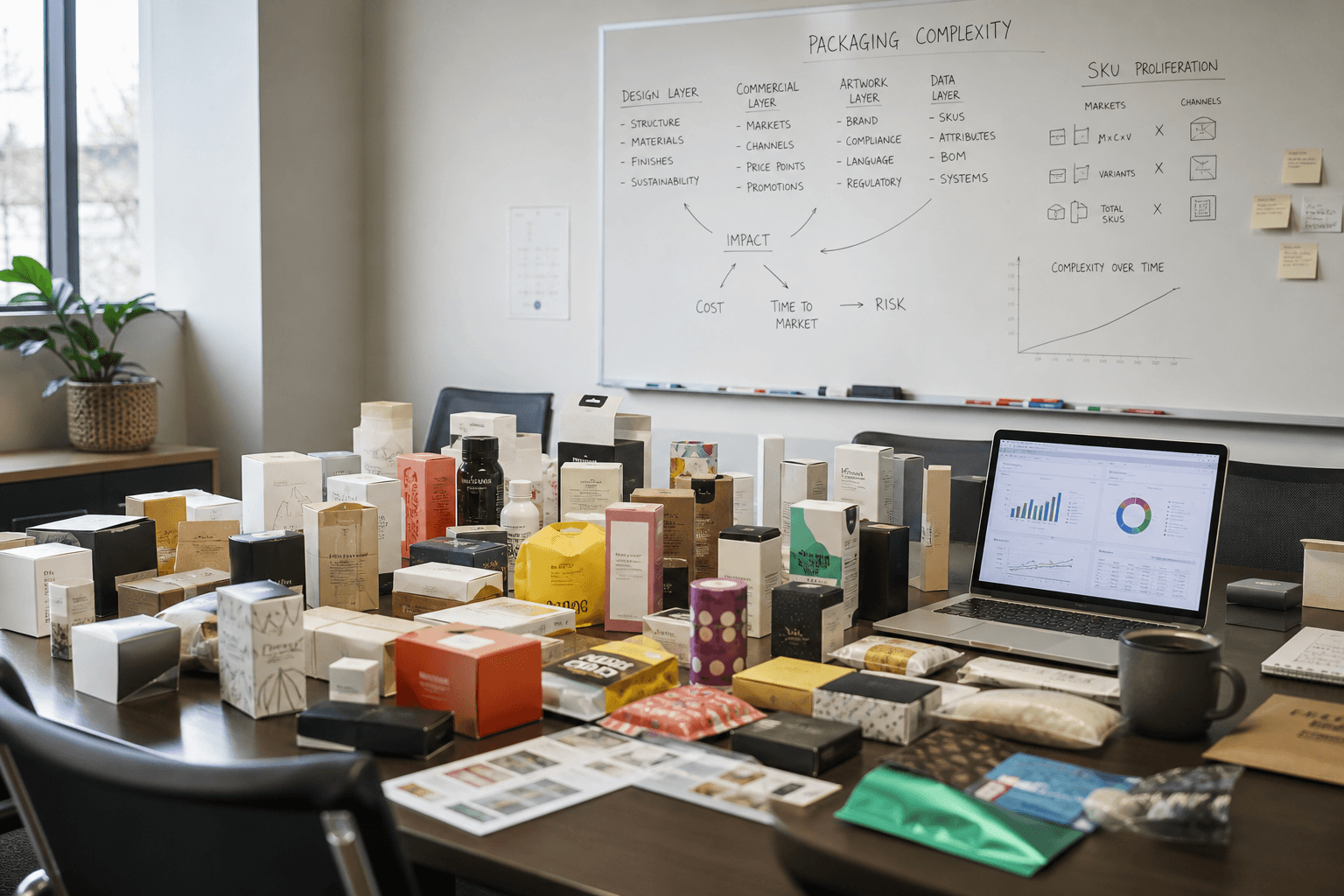
 William Janeway : 2026-10-12 10:15
Learn how SKU proliferation builds up in packaging portfolios, what it really costs, and how to decide which variants earn their place.
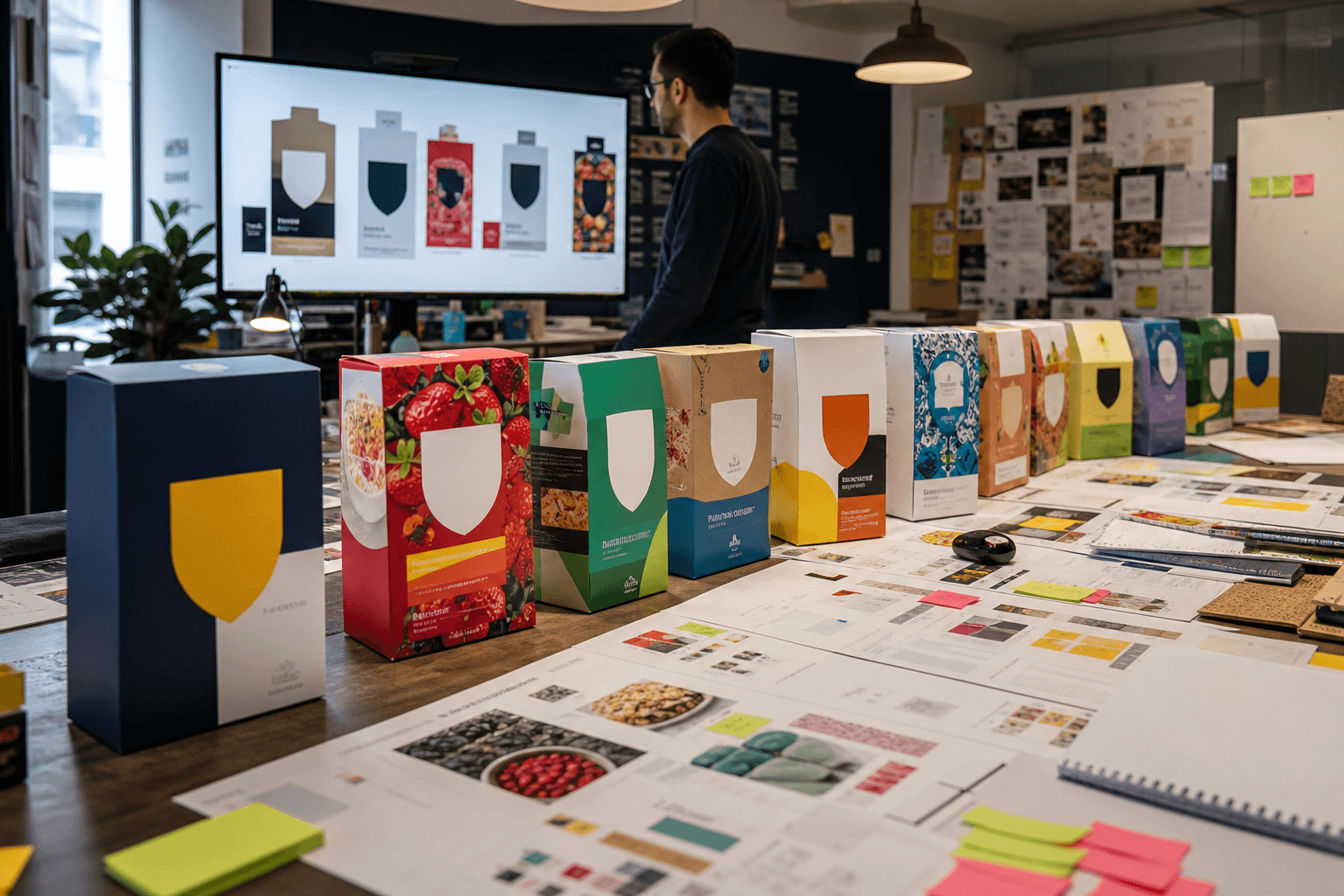 Tilda Eriksson : 2026-10-02 10:15
A practical framework for multi-market brands: decide which packaging elements stay global, which adapt locally, and how to stop guideline drift.